

Sport courts · A considered place to play
Pickleball Court Installation in Palm Beach County
Plan a backyard pickleball court around your home, garden, neighbors, and HOA requirements. A defined scope, from acoustic review to installation.
Plan your court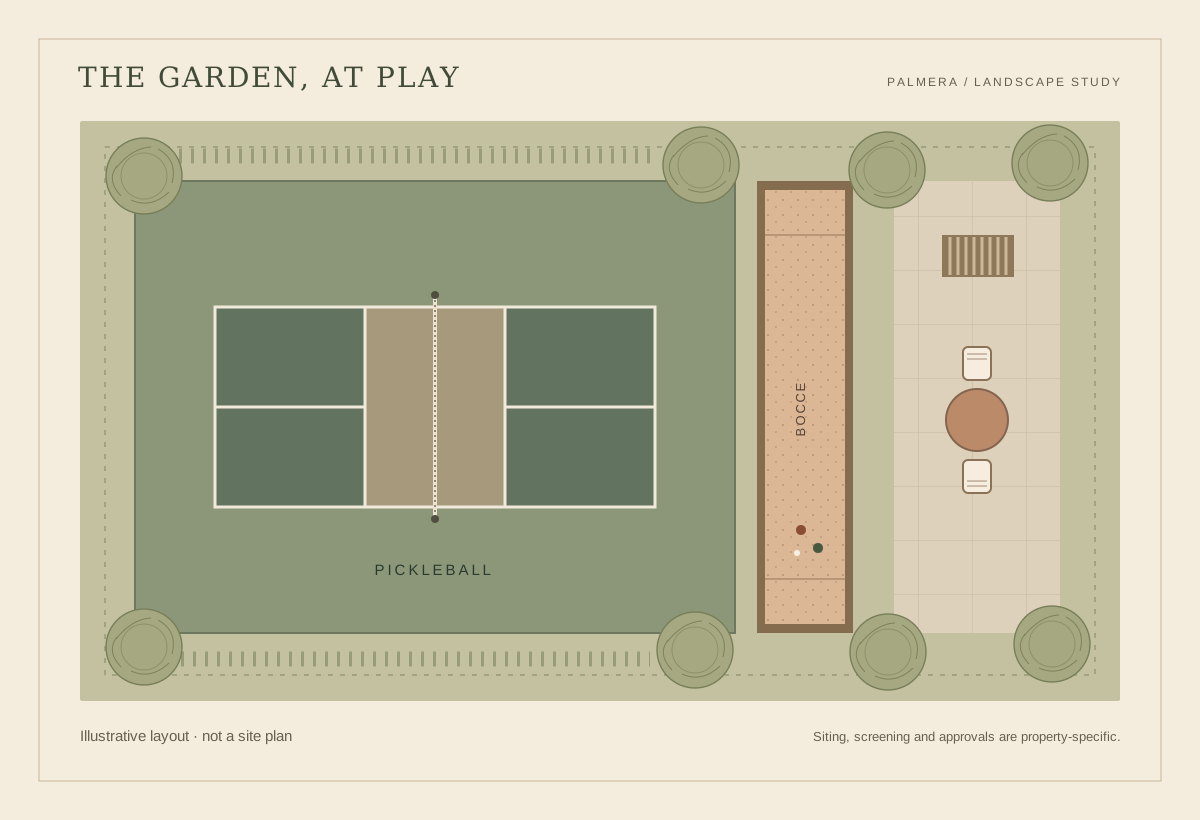
MADE FOR YOUR EVERYDAY
More thought
in every detail.
Good decisions start with the whole picture.
A court should belong to the property as naturally as a terrace. Palmera starts with where you want to play, what surrounds the garden, and what your community permits. Court placement, drainage, fencing, surface colors, and the view from the house belong in the same conversation. Noise deserves its own review before a layout is settled. The aim is a court that feels considered in everyday use, with approval responsibilities and specialist work established before construction.
The garden comes first
Consider views from the house, circulation, shade for spectators, and planting around the playing area. Muted olive, clay, and stone tones provide a starting palette; final colors depend on the selected court system and community review.
Plan for the neighbors
Nearby homes, windows, patios, playing hours, and the character of the surroundings shape the sound review. Where needed, an acoustic specialist evaluates the layout and any proposed barrier. Planting or a fence alone is not evidence of acceptable noise.
A clear community submission
We scope an ARC packet around your association’s requirements: the proposed layout, surfaces, fence details, drainage approach, and specialist reports where requested. Any survey, engineering, or other professional documentation is identified in the proposal.
THE PATH TO YOUR PROJECT
Considered from
the ground up.
Establish what is possible
Review the property, community documents, intended use, access, and known drainage issues. Identify local permit requirements and whether acoustic or other specialist review is needed before committing to a court position.
Prepare the scope and reviews
Agree the layout, materials, proposed screening, ARC documents, permit responsibilities, and exclusions in writing. HOA review and government permits are separate steps. Obtain the required approvals before the relevant work starts.
Coordinate the installation
The project scope identifies slab, court surfacing, and fencing subcontractors. Any electrical work is assigned to a licensed electrical contractor. Timing is established around approvals, site preparation, materials, and the agreed contractor scope.
BEFORE THE FIRST SERVE
A thoughtful court starts
with a thoughtful brief.
Bring your community guidelines and any existing property survey to the first conversation. We can then define the reviews and documents your proposed court needs.
Read the HOA & noise guideTHE COMMUNITY REVIEW FILE
One property.
Every relevant detail.
- The settingProposed layout, playing clearance, neighboring homes, and applicable site restrictions.
- The surfaces & boundariesColors, slab and drainage scope, fence details, and the connection to the garden.
- The sound reviewIntended hours, equipment, nearby listening locations, and acoustic documentation where needed.
- The approval pathARC requirements, permit responsibilities, specialist drawings, and any lighting scope.
The proposal defines the packet and any professional services required. Review and approval remain with the relevant association and authorities.
Planning references: USA Pickleball court dimensions and acoustics guidance. Playing clearances are separate from zoning setbacks and acoustic design. Local requirements are checked for the specific property.
Can you guarantee my HOA will approve a court?
Approval belongs to the association, and some communities restrict or prohibit private courts. We begin with the governing documents and scope the submission around the property. A complete packet can support a decision; it cannot guarantee one. A government permit does not replace association approval.
What does a quiet-court approach actually mean?
It means reviewing the sound implications before committing to the design. Equipment, playing hours, placement, nearby homes, and any acoustic barrier must be considered together. USA Pickleball’s quieter-equipment categories do not certify a whole court or establish compliance with local noise rules.
How much space does a backyard court need?
USA Pickleball lists a 20-by-44-foot playing court and recommends a minimum total playing area of 30 by 60 feet, with 34 by 64 feet preferred. Those dimensions describe playing clearance. Additional space may be needed for zoning setbacks, fences, drainage, access, and the site’s acoustic design.
How much does pickleball court installation cost?
The quote depends on the existing site, access, ground and slab work, drainage, surfacing, fence design, and any acoustic or professional review. Optional lighting adds equipment, electrical work, and review considerations. Ask for these items to be broken out so you can compare complete scopes.
Does every project include acoustic fencing or lighting?
No. An acoustic enclosure needs a site-specific purpose and specification; a standard ball-containment fence is not an acoustic enclosure. Lighting is a separate decision involving the way you intend to play, neighboring properties, local rules, and your community. Include either only when the review and agreed scope support it.
KEEP EXPLORING