

Sport courts · An afternoon in the garden
Bocce Ball Court Installation in Palm Beach County
A residential bocce court with a considered surface, defined edges, and a place to gather. Plan a court that belongs with your Palm Beach County home.
Plan your court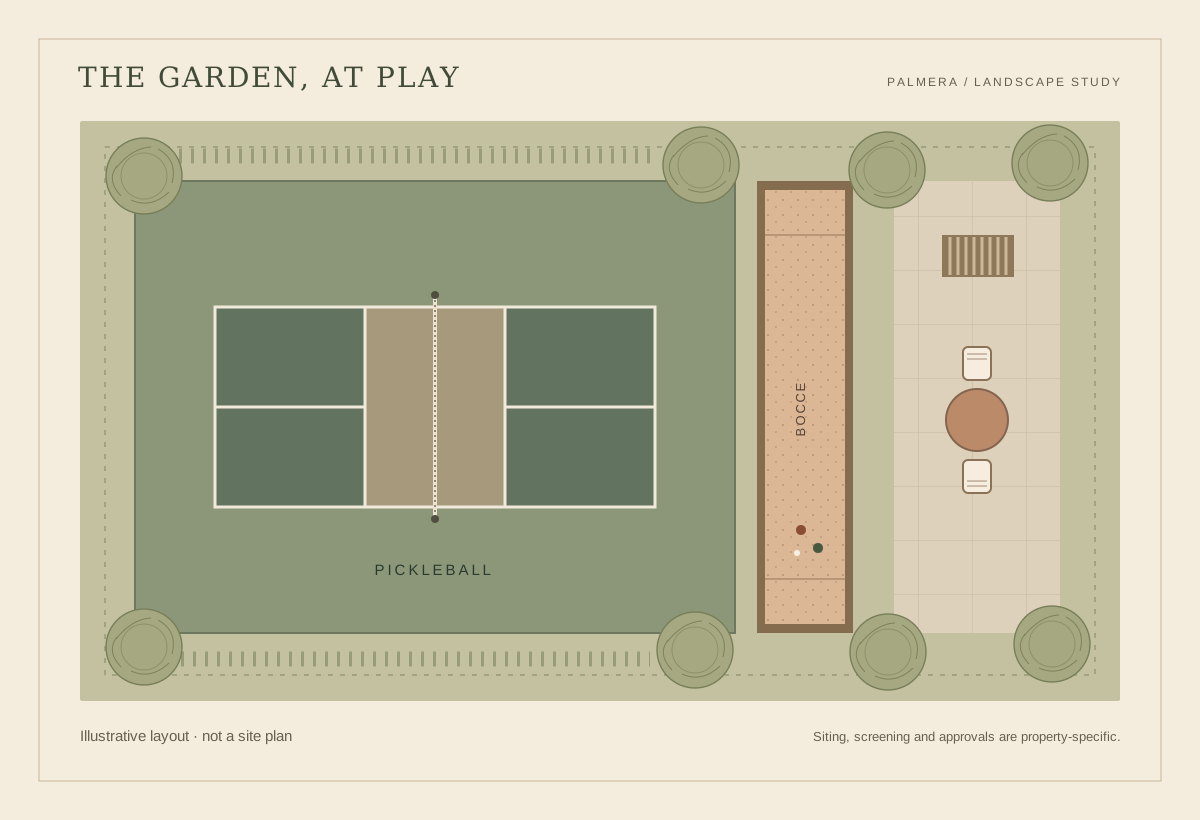
MADE FOR YOUR EVERYDAY
More thought
in every detail.
Good decisions start with the whole picture.
Bocce brings a slower rhythm to the garden: a few friends, an open afternoon, and somewhere comfortable to sit between turns. A residential lane can form an orderly edge to a terrace or sit within a longer garden. Palmera considers the setting and intended style of play before the footprint, surface, and edge details are agreed. For homeowners who also play in a community league, the league’s own dimensions and surface preferences are worth bringing to the first conversation.
A lane that belongs
Connect the court with paths, seating, and the architecture of the house. Edges and surrounding paving can echo existing garden materials, so the court feels part of the overall outdoor space.
A surface chosen for your use
Discuss casual play or practice for a particular league, the feel of the chosen surface, and its care requirements. The base, level, drainage, containment, and finished surface should be specified together.
Room for the afternoon
Plan access and a place to pause beside the lane. Consider sun during your usual playing hours, shaded seating, and the relationship to neighboring gardens. Any lighting or overhead structure needs its own scope and review.
THE PATH TO YOUR PROJECT
Considered from
the ground up.
Understand the setting
Walk the available space, discuss how you play, and review access, existing grades, nearby planting, and community requirements. Share any league specifications you want the residential court to follow.
Define the court
Agree the footprint, base, drainage approach, surface, edging, and adjoining landscape work. Identify approval responsibilities and the supporting documents needed before installation.
Build to the agreed scope
Coordinate preparation and installation around the selected system and required approvals. Establish the care instructions for the finished surface so the court can become part of your routine.
Does a backyard bocce court have to match a league court?
Start with how you intend to use it. If practicing for a particular league matters, obtain that league’s current dimensions and surface requirements. A smaller recreational lane should be described as such. We agree the footprint after reviewing the available space and any applicable site rules.
Which bocce surface should I choose?
Compare the specified court systems by playing characteristics, maintenance, drainage design, and the surrounding garden. Ask what routine grooming or replenishment is required and how edges and adjacent paving will meet the playing surface. Material selection is part of the project-specific proposal.
Will my community need to review the court?
Your governing documents and property determine the review requirements. Changes to the garden, edging, drainage, fences, or lighting may need association review, government permits, or both. Establish those responsibilities before work begins; approval cannot be assumed from the court’s size.
Can the court be part of a turf and paver project?
Yes. The court, adjoining pathways, seating, and lawn areas can be planned together. An integrated scope helps clarify levels, water movement, material transitions, and access instead of treating each surface as a separate addition.
KEEP EXPLORING